Getting Started with Platform Engineering: A Technical Perspective
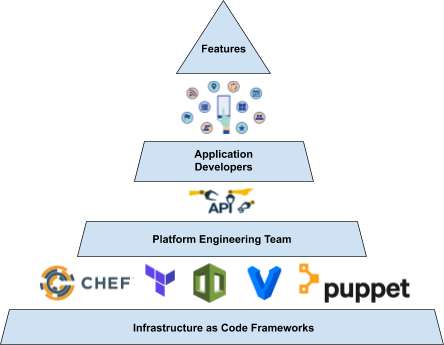
Platform engineering, an emerging field within the realm of DevOps, plays a crucial role in enhancing developer productivity and streamlining software delivery at scale. In this technical perspective, we'll dive deeper into the components of platform engineering and explore how it aligns with the principles of DevOps.
The Value of Platform Engineering
Platform engineering aims to simplify complex software delivery processes, align development practices with business goals, and reduce the burden of managing intricate tools and infrastructure. It serves as the backbone for successful DevOps implementations, providing stability and efficiency to the software development lifecycle.
The work of platform engineering teams can be seen in four key areas:
1. Building Internal Developer Platforms (IDPs)
An Internal Developer Platform is the cornerstone of platform engineering. It's a centralized collection of tools, services, and automated workflows that support rapid software development and delivery. IDPs abstract the complexities of configuring applications and managing infrastructure.
Developers can leverage IDPs to self-serve the resources they need for building, testing, deploying, and monitoring applications. This reduces friction and empowers developers to work independently, eliminating the need to wait for operational teams to provision resources.
2. Paved Roads to Standardize Processes
Platform engineering creates "paved roads" that standardize and scale typical DevOps processes. These roads simplify and accelerate development while allowing developers some autonomy in choosing their preferred tools when necessary.
In larger organizations, excessive autonomy can lead to tool sprawl, knowledge silos, and increased costs. Paved roads offer a reliable path to delivery, reducing operational complexity on development teams while enforcing security, compliance, and budget controls.
3. Setting Internal Service Level Agreements (SLAs)
Platform teams treat IDPs as products, and developers as their customers. To drive adoption, they establish high expectations for IDP reliability and performance, holding themselves accountable through SLAs.
Maintaining a stable and secure internal platform is essential. Platform teams actively monitor the health and performance of the IDP to ensure developer productivity and customer satisfaction remain high.
4. Monitoring Key Performance Metrics
Platform teams monitor critical engineering performance metrics such as throughput, workflow durations, and incident recovery times. This data helps identify bottlenecks and tailor the platform to meet developer needs.
By tracking developer productivity and performance, platform teams ensure that the platform aligns with the organization's development patterns and business goals.
Do You Need a Platform Team?
Determining whether your organization requires a platform team depends on its size, the complexity of its projects, and its product maturity. If your organization is working on large distributed projects, has cross-functional teams, and is scaling up operations, a platform team is a valuable addition.
In contrast, small organizations with a few developers working on monolithic applications might not benefit significantly from a platform team. In this case, focus on achieving product-market fit and automating repetitive tasks.
Platform Engineering with CI/CD
A robust Continuous Integration and Continuous Delivery (CI/CD) pipeline is an integral part of any platform team's toolkit. It automates critical development tasks, triggering workflows to build, test, and deploy code across various environments. A mature CI/CD pipeline also serves as a control plane for enforcing and measuring business priorities.
CI/CD is at the core of platform engineering, enabling self-service, reusability, and other key principles.
Let us help you build your operational excellence!
For organizations seeking expert guidance and support to embark on their platform engineering journey, partnering with ScaleShift can be the ideal solution. As cloud transformation experts specializing in various domains, including cloud migration and building DevOps culture, ScaleShift empowers organizations to streamline operations, optimize infrastructure, and achieve efficient and agile software delivery. With ScaleShift as your trusted ally, you can navigate the path to successful platform engineering and DevOps implementation.
By Zach ⸺ 2023-10-20